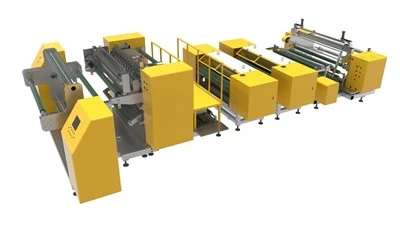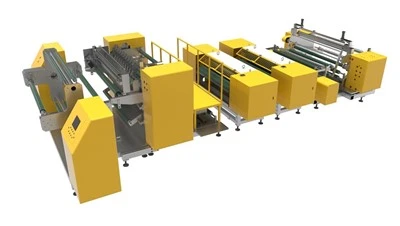
Convert Wide Airlaid Paper into 18 Festooned Outputs
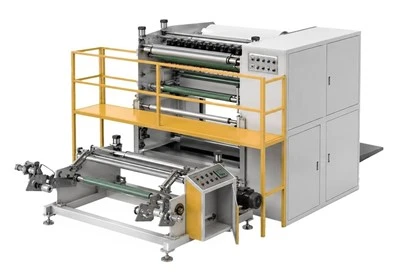
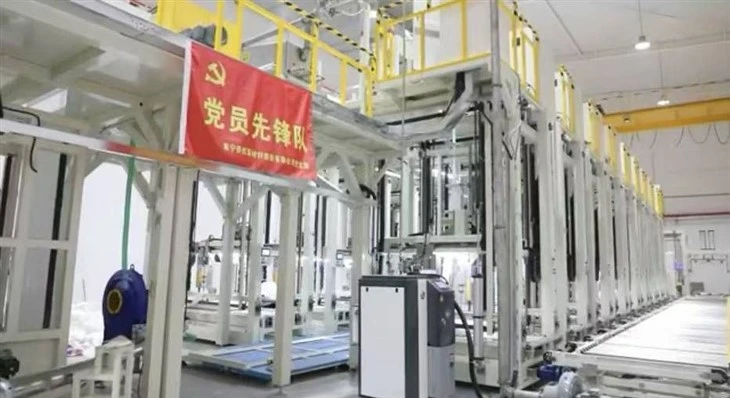
The 18-head airlaid paper online festoon line receives a wide material web, processes the required slit lanes and forms separate festooned stacks. The line is designed for multi-output airlaid paper converting where lane widths, fold dimensions and finished stack specifications must be coordinated within one production system.
Unwinding, Slitting and Parallel Festooning
Wide-Roll Unwinding
The airlaid paper roll enters the line according to the confirmed width and roll specifications.
Web Guidance
The wide material web follows the required path before entering the slitting section.
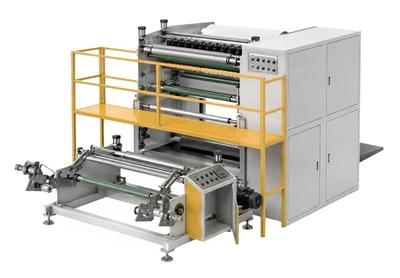
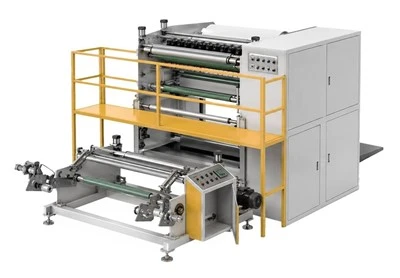
Multi-Lane Slitting
The web is divided into the required lane widths for the active festoon heads.
Parallel Festooning
Individual material lanes are folded back and forth through their assigned festoon heads.
Stack Collection
Each lane forms a separate finished stack for handling or downstream processing.
18-Head Online Festoon Line Parameters
| Line Type | 18-Head Airlaid Paper Online Festoon Line |
|---|---|
| Maximum Design Speed | 200 m/min |
| Maximum Unwinding Diameter | 2500 mm |
| Material Width Range | 300–1200 mm |
| Minimum Slitting Width | 40 mm |
| Finished Product Dimensions | 1130 × 980 × 1600 mm |
| Approximate Overall Dimensions | 46000 × 16000 × 8000 mm, L × W × H |
The final lane layout, active-head arrangement and finished stack specifications are confirmed according to the buyer's material and production plan.
Planning the 18 Festoon Outputs
Total Web Width
The wide input web must fall within the specified material width range and match the required lane plan.
Individual Slit Widths
Each required output width must be listed, including any lanes that use different specifications.
Active Head Count
The production plan must identify which festoon heads operate for each material specification.
Fold Length
The required fold length determines the length of the finished stack for each output lane.
Stack Completion
The completion basis can be defined by length, quantity, weight or finished stack height.
Stack Removal
The layout must provide suitable access for the confirmed stack collection and handling method.
Airlaid Paper Data Required for Evaluation
Material and Roll Data
- Airlaid paper type and application
- Material basis weight and thickness
- Total roll width
- Roll diameter and core dimensions
- Roll weight
- Material tensile and surface conditions
Slitting and Output Data
- Required number of active lanes
- Width of every slit lane
- Lane sequence across the wide web
- Required fold length
- Finished stack dimensions
- Material quantity or length per stack
Factors That Affect Line Configuration
Lane Combination
The sum of the slit widths and required edge allowances must match the usable input web.
Material Behavior
Basis weight, thickness and tensile condition affect slitting, guidance and festoon folding.
Operating Speed
The selected production speed must suit the material and finished stack requirements.
Specification Changes
Different slit-width combinations require a defined setup and confirmation procedure.
Stacking Area
Eighteen output positions require a planned layout for stack formation and removal.
Factory Space
The buyer should verify the installation area, access route and maintenance clearance against the overall dimensions.
Information Needed for a Technical Proposal
Lane Planning, Manufacturing and Commissioning
Material Evaluation
We review the airlaid paper samples, roll specifications and required operating conditions.
Lane Layout Review
We verify the input width, slit-width combination, head allocation and finished stack requirements.
Equipment Manufacturing
Our resources include CNC machining centers, lathes, drilling machines and milling machines.
Pre-Shipment Testing
We perform complete-machine testing before shipment and confirm project-specific inspection items.
Installation Support
Installation and commissioning support is arranged according to the confirmed factory conditions.
Operator Training
Training covers roll loading, material threading, slitting setup, stack adjustment and routine maintenance.
Plan the Slitting and Festoon Layout for Your Airlaid Paper
Send the material data, roll specifications, complete slit-width layout, finished stack dimensions, target speed and factory layout.
18-Head Airlaid Paper Festoon Line FAQs
It unwinds a wide airlaid paper web, processes the required slit lanes and converts them into separate festooned stacks through 18 output heads.
The maximum design speed is 200 m/min. The operating speed used for a project also depends on the material and finished stack requirements.
The stated material width range is 300–1200 mm. The required slit-width combination must fit within the usable input web.
The stated minimum slitting width is 40 mm. Please provide the width and position of every required output lane.
The buyer should submit the required width for every lane. Different width combinations must be reviewed against the input web and machine arrangement.
The approximate overall dimensions are 46000 × 16000 × 8000 mm. Additional access and maintenance space should be considered in the factory layout.
Please send the airlaid paper sample, roll specifications, full slitting layout, output widths, stack dimensions, required speed, factory layout and destination country.
Hot Tags: 18 heads airlaid paper online festoon line, China 18 heads airlaid paper online festoon line manufacturers, suppliers, factory