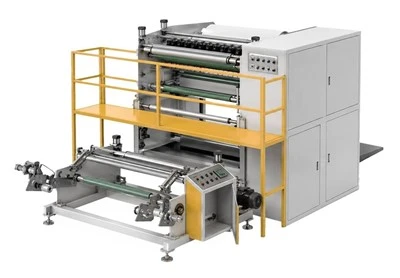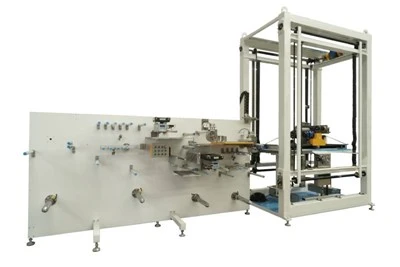
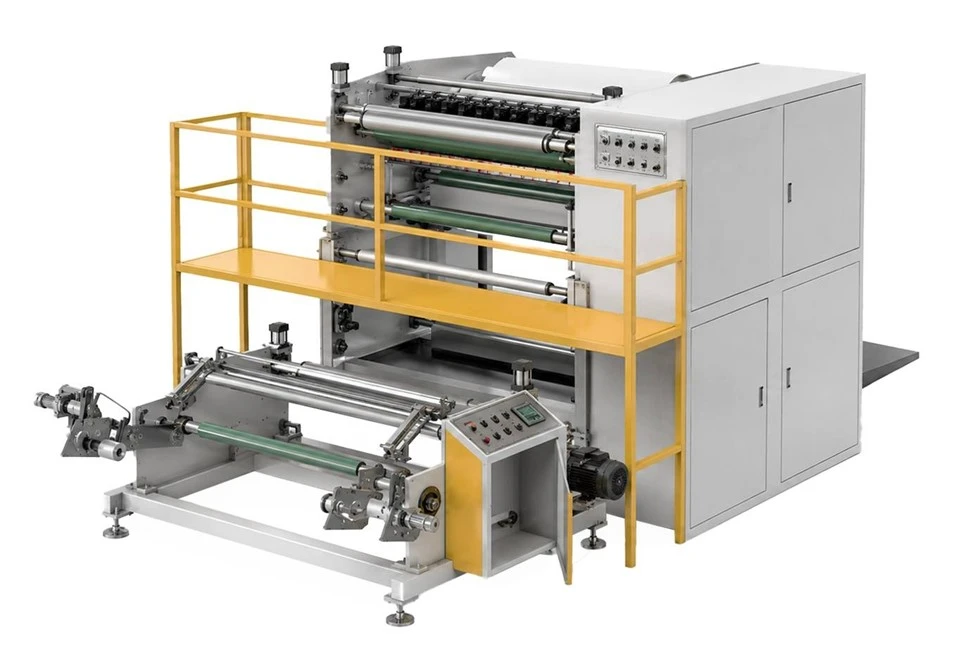
Strip Stacker Line for Organized Material Collection
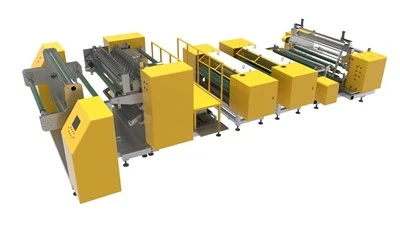
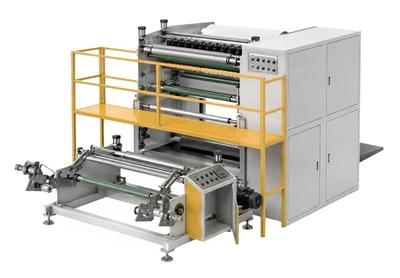
The strip stacker line receives narrow material strips from compatible slitting or converting equipment and organizes them into defined stacks for the next production, handling or packaging stage.
Each line is configured around the buyer's strip material, strip dimensions, number of output lanes, stack format and upstream interface. These operating conditions must be confirmed before the equipment layout and technical proposal are finalized.
From Narrow Strip Output to Controlled Stacks
Strip Reception
Receives continuous or separated strips from the specified upstream process. Entry position and connection height are matched during line engineering.
Lane Guidance
Guides the material lanes through the collection path according to the confirmed strip width, spacing and output arrangement.
Stack Formation
Organizes the incoming strips into the required stack format. Stack completion and discharge requirements are defined for each project.
Output Handling
Delivers completed stacks to the agreed collection or transfer position for manual handling or connection with a downstream stage.
Parameter Coordination
Operating settings are matched with the material characteristics and upstream output conditions confirmed by the buyer.
Line Integration
Mechanical position, material direction and production coordination are reviewed before the final line arrangement is approved.
When to Consider a Strip Stacker Line
Suitable Production Conditions
- Narrow material strips leave an upstream converting process
- Several output lanes need organized collection
- Loose strip accumulation causes handling difficulties
- A defined stack format is required for the next operation
- The stacker must match an existing or planned production line
Conditions Requiring Technical Review
- Materials that curl, stretch or generate static electricity
- Different strip widths produced on the same line
- Frequent changes in lane quantity or output arrangement
- Limited installation space around the upstream equipment
- Special stack transfer or downstream packaging requirements
Configuration Items for Your Production Line
| Strip Material | Confirm the material composition, surface condition, thickness or basis weight, flexibility and any static tendency. |
|---|---|
| Strip Dimensions | Provide the minimum and maximum strip width, strip length where applicable, and permitted dimensional variation. |
| Output Lanes | Confirm the number of lanes, lane spacing and whether different specifications will run on the same line. |
| Upstream Equipment | Provide the equipment type, material outlet direction, discharge height, operating speed and available interface information. |
| Stack Format | Define the required quantity, height, length, orientation or other condition used to complete each stack. |
| Stack Discharge | Confirm whether stacks will be collected manually or transferred to another handling or packaging process. |
| Installation Conditions | Provide the available floor space, working direction, utilities and any restrictions affecting the proposed layout. |
| Electrical Requirements | Confirm the destination country's power supply and applicable electrical requirements before production. |
Material Flow Through the Stacking Line
Matching the Stacker to Existing Equipment
A strip stacker should not be selected only by its overall size. Reliable integration depends on the relationship between the strip characteristics, lane layout, upstream discharge and required stack output.
We review the material path and equipment interface before defining the line arrangement. Drawings, videos and product samples can help clarify the operating conditions when the stacker will be connected to existing equipment.
Information Needed for Line Matching
- Strip material and product application
- Minimum and maximum strip dimensions
- Number and spacing of output lanes
- Required production speed
- Required stack format and discharge method
- Upstream machine drawings, photos or videos
- Available installation area and line direction
- Destination-country electrical requirements
From Layout Confirmation to Line Commissioning
Strip Stacker Line FAQ
Material suitability depends on the strip's composition, dimensions, flexibility, surface condition and static behavior. Send the material specification and sample information for technical evaluation.
The lane arrangement can be evaluated according to the required output quantity, strip widths, lane spacing and upstream machine layout. The final number of lanes must be confirmed for the specific project.
Integration can be evaluated after we review the upstream discharge height, material direction, operating speed, lane positions, available space and control requirements.
Folding is not assumed as a standard function of this product. If the required process includes folding before stacking, provide the fold format, product dimensions and material details so the appropriate equipment solution can be evaluated.
Provide the required quantity, stack height, strip orientation, discharge method and downstream handling conditions. These details are reviewed before the stacking method is finalized.
Send the strip material, dimensions, lane quantity, required speed, stack format, upstream equipment information, installation space, destination country and electrical requirements.
Send Your Strip and Line Specifications
Share your strip material, dimensions, number of lanes, required speed, stack format and upstream equipment information. We will review the operating conditions and prepare a suitable technical proposal.
Request a Technical ProposalHot Tags: strips stacker line, China strips stacker line manufacturers, suppliers, factory