Surface Embossing for Duplex Topsheet Material
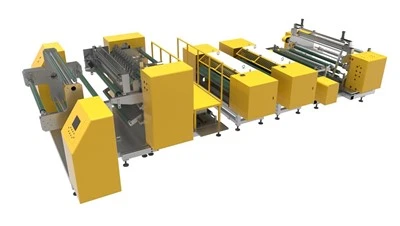
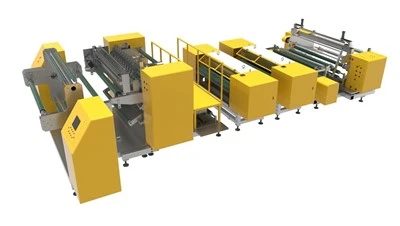
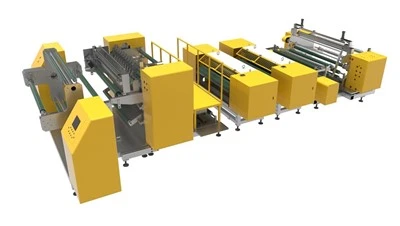
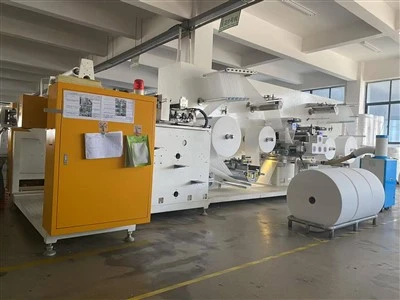
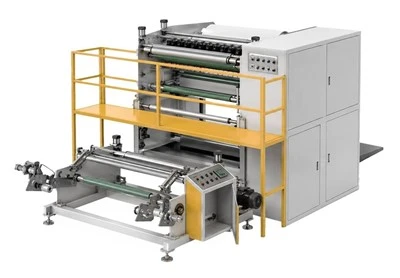
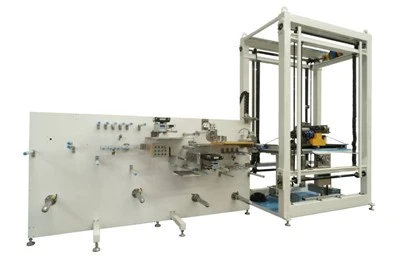
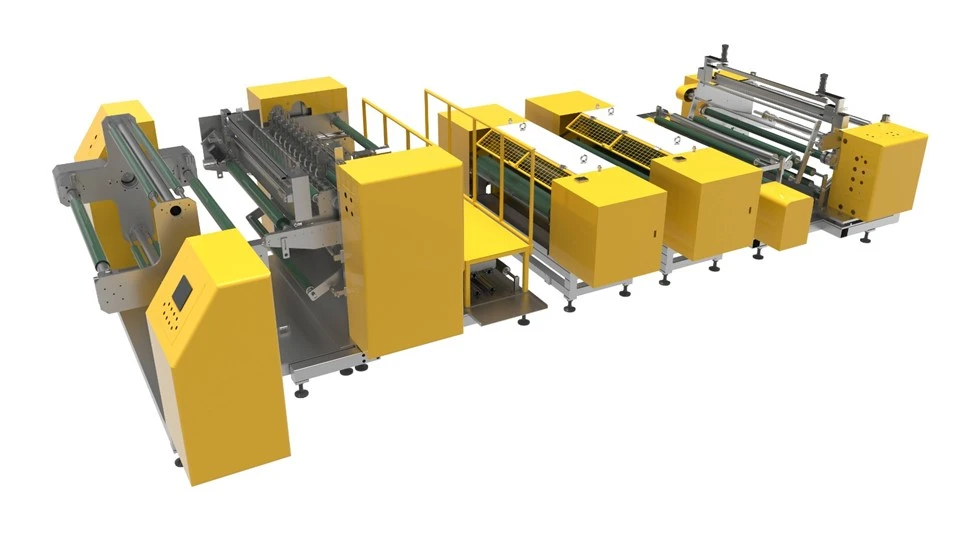
The duplex topsheet nonwoven embossing machine processes continuous roll-fed nonwoven material to create the specified surface pattern for duplex topsheet production and subsequent hygiene-product converting.
Machine configuration depends on the nonwoven structure, material width, parent-roll dimensions, embossing pattern, production speed and finished-roll requirements. The required number of material layers must be confirmed separately and is not determined by the word "duplex" alone.
Continuous Nonwoven Embossing for Topsheet Production
Roll-Fed Material Input
The topsheet nonwoven enters from the configured unwinding position according to its roll dimensions and winding direction.
Nonwoven Web Guidance
The material follows the specified path according to its width, thickness or basis weight, flexibility and surface behavior.
Surface Pattern Formation
The embossing section forms the approved pattern on the required material area.
Pattern Position Control
The pattern width and position are configured according to the finished topsheet layout supplied by the buyer.
Continuous Web Output
The embossed nonwoven leaves the processing section as a continuous material web.
Finished-Roll Collection
Processed material is collected according to the approved roll dimensions and downstream production requirements.
From Nonwoven Parent Roll to Embossed Topsheet Roll
Define the Required Embossed Surface
Embossing requirements should be communicated with a dimensional drawing, artwork or physical reference sample. A product name alone does not define the required pattern geometry.
Material characteristics and the requested visual and structural result must be evaluated together before the embossing configuration is approved.
Pattern Information to Provide
- Pattern drawing or clear reference image
- Repeat dimensions and pattern direction
- Required embossed width
- Pattern position across the material
- Areas that must remain unembossed
- Required surface orientation
- Representative finished-product sample
- Acceptable finished appearance
Information Required Before Machine Configuration
| Material Application | Nonwoven material intended for duplex topsheet production. |
|---|---|
| Nonwoven Type | Provide the material composition, structure, thickness or basis weight, flexibility and surface characteristics. |
| Number of Layers | Confirm whether one nonwoven web is embossed or two layers must be handled together. |
| Working Width | Confirm the overall material width and the effective area that requires embossing. |
| Parent Roll | Provide the roll width, outside diameter, core size, roll weight and winding direction. |
| Embossing Pattern | Supply a dimensional drawing, repeat dimensions, artwork or physical sample. |
| Pattern Position | Define the embossed width, centerline position, edge margins and any unembossed areas. |
| Production Speed | Provide the normal and required maximum operating speeds for the specified material and pattern. |
| Finished Output | Confirm the output width, roll diameter, core size, winding direction and downstream handling method. |
| Electrical Requirements | Confirm the destination-country power supply and applicable electrical requirements before manufacturing. |
Choose the Machine by the Required Material Process
Select this configuration when the main requirement is forming a surface pattern on a continuous topsheet nonwoven web.
Request a combined machine when the topsheet requires both surface embossing and a defined hole arrangement.
Request a double-layer configuration when two material webs must be handled, aligned or processed together.
When to Use This Topsheet Embossing Machine
Suitable Production Requirements
- Topsheet nonwoven is supplied in continuous roll form
- A defined surface embossing pattern is required
- The effective pattern width and position are known
- The processed material remains in continuous web form
- Input and finished-roll formats can be clearly specified
Conditions Requiring Further Evaluation
- Two layers must be processed simultaneously
- The material also requires perforating or lamination
- Several embossing patterns are required
- The nonwoven stretches or deforms during processing
- Automatic roll change or inline inspection is required
Support From Pattern Review to Commissioning
Duplex Topsheet Nonwoven Embossing Machine FAQ
Not necessarily. Duplex topsheet identifies the target material or product application. The required number of input layers and material paths must be confirmed separately.
Custom patterns can be evaluated from dimensional drawings, artwork, clear reference images or physical samples. Feasibility depends on the pattern and nonwoven properties.
Perforating is not assumed as a standard function of this embossing machine. If perforation is required, provide the hole shape, size, spacing and distribution for configuration review.
A defined embossing area can be evaluated after the total web width, required pattern width, position and unembossed areas are provided.
Provide the nonwoven composition, structure, thickness or basis weight, web width, surface orientation, parent-roll dimensions and a representative material sample.
Send the material specification, number of layers, working width, parent-roll dimensions, embossing pattern, pattern position, required speed, output format and electrical requirements.
Send Your Nonwoven and Embossing Pattern
Provide the nonwoven specification, number of layers, working width, parent-roll dimensions, embossing drawing, pattern position, production speed and finished-roll format. We will review the process and prepare a suitable machine proposal.
Request a Topsheet Embossing ProposalHot Tags: duplex topsheet nonwoven embossing machine, China duplex topsheet nonwoven embossing machine manufacturers, suppliers, factory