Center-Zone Lamination for Two Nonwoven Webs
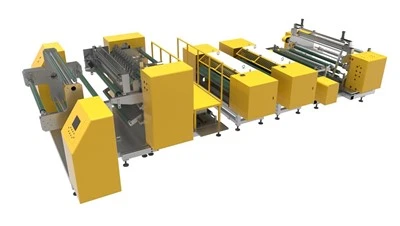
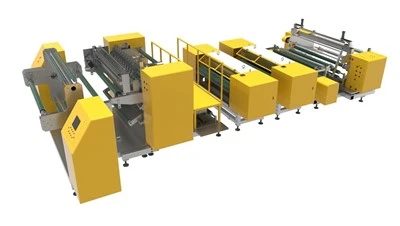
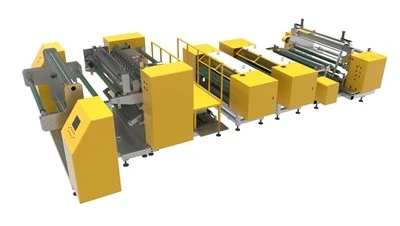
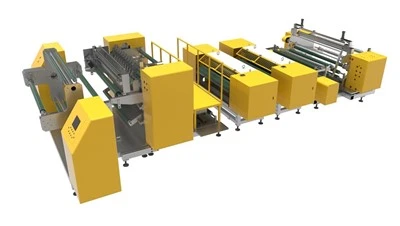
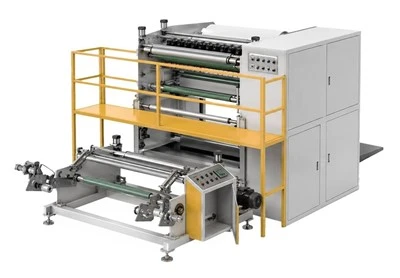
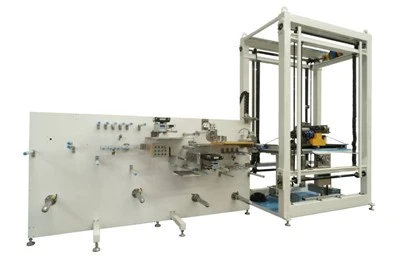
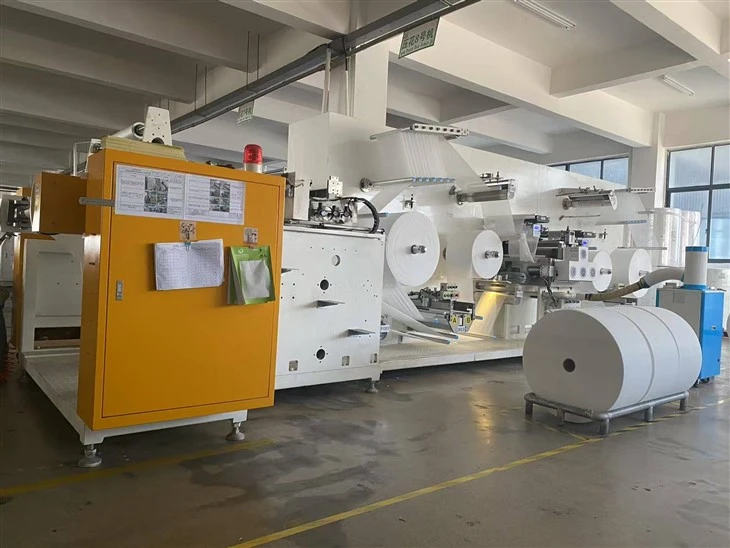
The M160 double-layer nonwoven center lamination machine aligns two continuous nonwoven webs, applies the specified bonding process within a centered lamination zone, and collects the combined material for the next production stage.
M160 is the supplied model designation. The actual material widths, center bonding width, unbonded side areas, bonding method and finished-roll specifications must be confirmed for each project.
Align, Bond and Collect Two Nonwoven Layers
First Nonwoven Web Feeding
The first nonwoven roll enters its configured material path according to the supplied roll dimensions and web direction.
Second Nonwoven Web Feeding
The second nonwoven layer is guided toward the lamination area with the required surface orientation and overlap position.
Double-Layer Web Alignment
Both material webs are positioned according to the confirmed centerline, web widths and required lamination layout.
Specified Central Lamination Zone
The two layers are joined within the approved central area rather than assuming full-width bonding.
Continuous Composite Output
The bonded double-layer material leaves the lamination section as a continuous web for the confirmed output process.
Finished Material Handling
The processed material is collected according to the approved finished-roll or downstream connection requirement.
Continuous Double-Layer Center Lamination
Define the Center Bonding Zone
Center lamination leaves specified areas outside the central bonding zone unbonded. The relationship between the material width, bonding width and side areas must therefore be clearly defined.
A cross-sectional or width-layout drawing is recommended before machine configuration is approved.
Required Lamination Dimensions
- Overall width of the first nonwoven layer
- Overall width of the second nonwoven layer
- Required central bonding width
- Position of the bonding zone on the material
- Required unbonded width on each side
- Permitted web and bonding-position variation
- Required surface orientation for both layers
- Finished composite width and collection format
Information Required Before Machine Configuration
| Machine Model | M160 double-layer nonwoven center lamination machine. |
|---|---|
| First Nonwoven Layer | Provide the material type, width, thickness or basis weight, surface orientation and relevant material properties. |
| Second Nonwoven Layer | Provide the corresponding material specification, width, thickness or basis weight and surface orientation. |
| Parent Rolls | Confirm the roll width, outside diameter, core size, roll weight and winding direction for both input materials. |
| Center Bonding Width | Specify the required bonding-zone width and its position relative to the web centerline. |
| Unbonded Side Areas | Define the required unbonded width on the left and right sides of the composite material. |
| Bonding Method | Provide the required bonding process or finished-product sample. The applicable method must be confirmed for the materials. |
| Production Speed | Provide the normal and required maximum operating speeds for the intended product. |
| Finished Output | Confirm the finished width, collection format, roll dimensions and any downstream connection requirements. |
| Electrical Requirements | Confirm the destination-country power supply and applicable electrical requirements before manufacturing. |
Center Lamination or Full Lamination?
Choose M160 When
- Only a central area of the two layers must be bonded
- Unbonded material areas are required on both sides
- The bonding-zone position is defined by the product design
- The final web remains partially unbonded across its width
Request Another Configuration When
- The two layers must be bonded across the full working width
- No unbonded side areas are required
- The finished product uses a different lamination layout
- The required bonding width exceeds the M160 configuration
When to Use the M160 Center Lamination Machine
Suitable Production Requirements
- Two continuous nonwoven layers must be combined
- Bonding is required only within a central area
- Both material widths and overlap positions are defined
- Unbonded side areas are part of the product design
- The finished material remains in continuous web form
Conditions Requiring Further Evaluation
- The two nonwovens have different stretch characteristics
- Several center bonding widths are required
- The bonding position changes between products
- The materials are sensitive to heat or process pressure
- Full-width bonding or additional layers are required
Support From Material Review to Commissioning
M160 Nonwoven Center Lamination Machine FAQ
Center lamination joins two nonwoven layers within a specified central zone while leaving the required areas outside that zone unbonded.
M160 is treated as the supplied model designation. The exact material width, effective bonding width and side-area dimensions must be confirmed in the technical specification.
Different materials can be evaluated after reviewing their composition, thickness or basis weight, flexibility, surface properties and dimensional behavior.
The bonding method must be confirmed from the two materials and required finished result. Send the material specifications and a finished-product sample for process evaluation.
The M160 configuration focuses on a specified central bonding zone. A full lamination machine is intended when the two layers must be bonded across the required full working width.
Send both nonwoven specifications, material widths, parent-roll dimensions, center bonding width and position, unbonded side widths, required speed, output format and electrical requirements.
Send Your Double-Layer Lamination Layout
Provide both nonwoven specifications, material widths, parent-roll dimensions, center bonding width and position, required unbonded side areas, production speed and finished-output format. We will review the process and prepare a suitable machine proposal.
Request an M160 Machine ProposalHot Tags: double-layer nonwoven middle lamilation machine, China double-layer nonwoven middle lamilation machine manufacturers, suppliers, factory