Product Introduction
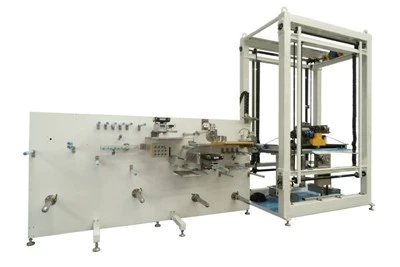
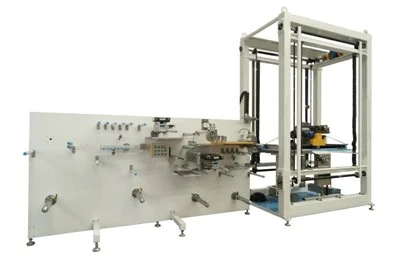
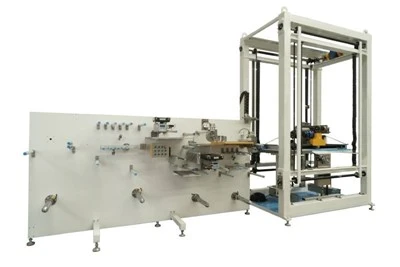
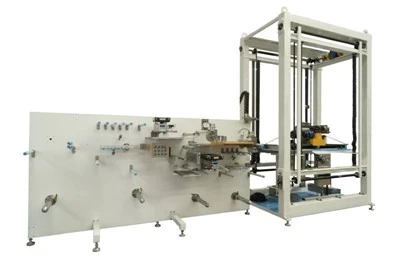
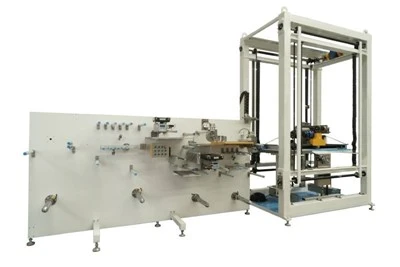
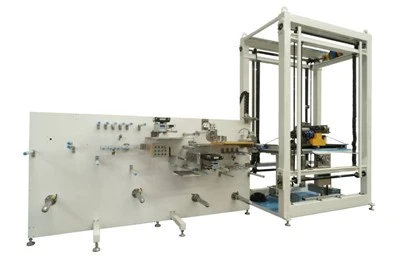
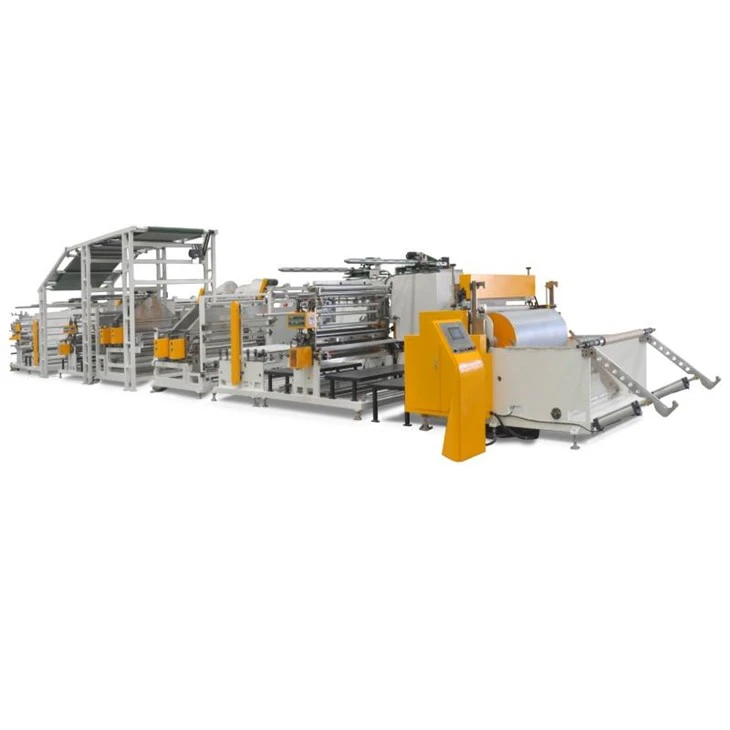
The full automatic SAP sheet lamination machine produces wide-format sandwich absorbent core material for disposable hygiene products. It combines the required material layers with superabsorbent polymer into a continuous composite sheet for subsequent slitting, folding, winding or integration into downstream converting processes.
The documented 1200 mm configuration produces a five-layer sandwich structure at speeds up to 100 m/min. Its effective composite width is 1200 mm, while SAP distribution deviation is controlled within ±3% under the specified production conditions.
This machine is suitable for manufacturers that need an independent SAP sheet production process before the absorbent core material enters diaper, training pant, adult incontinence or related hygiene-product converting lines.
Key Production Capabilities
- Continuous production of sandwich SAP absorbent core sheets
- Five-layer composite structure in the documented configuration
- Effective composite width of 1200 mm
- Production speed up to 100 m/min
- Controlled SAP powder distribution
- Material roll handling for diameters up to 1200 mm
- Configuration adaptation for specified raw materials and finished core requirements
- Connection planning for downstream slitting, folding, stacking or winding processes
Technical Specifications
|
Parameter |
Documented Specification |
|
Machine Type |
Full automatic SAP sheet lamination machine |
|
Product Structure |
Five-layer sandwich SAP core |
|
Production Speed |
Up to 100 m/min |
|
Effective Composite Width |
1200 mm |
|
SAP Distribution Deviation |
±3% |
|
Maximum Unwinding/Rewinding Diameter |
1200 mm |
|
Approximate Machine Dimensions |
22,000 × 4,500 × 2,500 mm |
|
Primary Application |
Absorbent core material for disposable hygiene products |
Actual operating speed and finished-material performance depend on the selected raw materials, SAP dosage, product structure and production conditions. These factors should be confirmed during technical evaluation.
What the Machine Produces
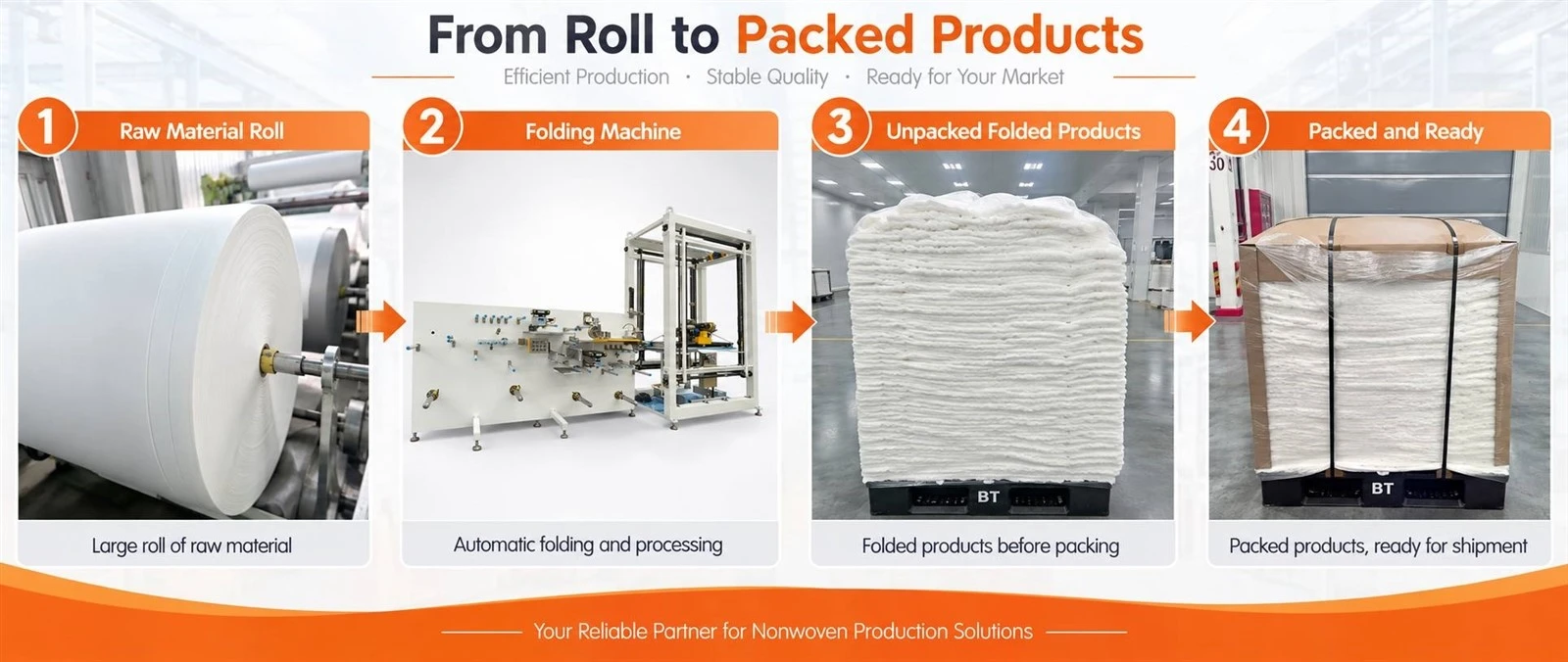
The equipment is designed to convert multiple input material layers and SAP into a continuous absorbent core sheet. The output can serve as an intermediate material for disposable hygiene-product manufacturing.
Typical downstream product directions include:
- Baby diapers
- Baby training pants
- Adult incontinence pants
- Other disposable hygiene products using composite absorbent cores
The exact suitability of the finished sheet depends on the buyer's target core structure, basis weight, width, SAP application requirement and downstream converting method.
When to Choose This Configuration
This full automatic SAP sheet lamination machine is intended for buyers who need wide-format, continuous SAP core sheet production rather than a narrow finished-core format.
It is particularly relevant when:
- A 1200 mm effective composite width matches the material plan.
- A five-layer sandwich core structure is required.
- The planned line speed is within the documented 100 m/min range.
- SAP distribution consistency is a key production requirement.
- The laminated sheet will be slit, folded, stacked or rewound in a subsequent process.
- A dedicated offline core-material production system is preferred.
Buyers requiring narrow finished cores, direct online connection to an existing hygiene-product machine or a different layer structure should provide their production arrangement for a separate configuration review.
Key Factors That Determine Machine Configuration
Finished SAP Sheet Structure
Provide the required number of layers, material sequence, finished basis weight and target absorbent-core construction. A sample or cross-sectional drawing can reduce uncertainty during configuration planning.
Raw Materials
The type, width, basis weight, roll diameter and handling characteristics of each material affect unwinding, tension control and lamination arrangements.
SAP Application Requirement
Specify the polymer type, target dosage, distribution area and acceptable deviation. SAP behaviour can vary with particle characteristics and the surrounding material structure.
Finished Width and Slitting Plan
Confirm whether the machine should produce one full-width sheet or material for downstream slitting into multiple lanes.
Required Production Speed
The target speed should be evaluated together with material stability, SAP dosage and downstream handling rather than treated as an isolated figure.
Downstream Process
Indicate whether the output will be wound, folded, stacked or connected to another converting process. The discharge arrangement must match the next production stage.
Request a SAP Sheet Line Proposal
Offline SAP Sheet Production and Online Integration
An offline SAP sheet lamination machine produces absorbent core material as a separate manufacturing stage. This arrangement can be suitable when the buyer wants to prepare SAP sheet rolls or folded material for later use on one or more converting lines.
An online configuration is intended for direct coordination with a downstream hygiene-product production line. It requires additional confirmation of line speed, signal communication, material buffering and installation layout.
The choice between offline production and online integration should be made according to the factory's material flow, number of downstream lines, product-change frequency and available floor space.
|
Selection Point |
Offline Lamination Machine |
Online Configuration |
|
Production Arrangement |
Independent SAP sheet production |
Connected to a downstream line |
|
Output Handling |
Winding, folding or stacking may follow |
Material feeds into the next process |
|
Production Planning |
Core material can be prepared separately |
Output follows the connected line demand |
|
Integration Requirement |
Lower dependence on downstream controls |
Speed and control coordination required |
|
Suitable Inquiry Information |
Sheet structure and output format |
Existing line data and interface details |
Custom Engineering for Buyer Requirements
Thinkcha develops and manufactures non-standard automation equipment for sanitary products, medical supplies, footwear materials and related applications. The company integrates equipment design, manufacturing, sales and technical service.
For an SAP sheet lamination project, engineering work can be based on the buyer's:
- Raw-material specifications
- Target absorbent-core structure
- Required composite width
- SAP dosage and distribution requirements
- Planned production speed
- Unwinding and rewinding arrangement
- Slitting, folding or stacking requirements
- Factory layout and downstream equipment
- Electrical requirements at the installation site
The final scope, technical drawing and machine configuration should be approved before manufacturing begins.
Manufacturing and Project Verification
Thinkcha's production facilities include CNC machining centers, lathes, drilling machines and milling machines. These resources support the machining and preparation of equipment components used in custom machinery projects.
The project process may include:
- Review of the buyer's product and process requirements
- Configuration and factory-layout discussion
- Technical proposal and scope confirmation
- Equipment manufacturing and production-progress follow-up
- Complete-machine testing before delivery
- Installation and commissioning arrangements
- Operator training and after-sales technical support
Test materials and acceptance conditions should be agreed before the pre-delivery trial. Buyers should confirm which raw materials they will supply, the target output and the acceptance criteria to be checked.
Quality Control Priorities
Quality evaluation for an SAP sheet lamination machine should focus on measurable production results rather than the appearance of the equipment alone.
Important verification points include:
- Effective composite width
- Line-speed stability under agreed materials
- SAP distribution deviation
- Material alignment through the process
- Unwinding and rewinding operation
- Finished sheet structure
- Equipment running condition
- Safety-device operation
- Output compatibility with the planned downstream process
The applicable test method, test duration, raw materials and acceptance limits should be recorded in the technical agreement.
Installation and Commissioning Preparation
Before shipment or installation, the buyer should confirm:
- Available workshop floor space
- Equipment access and unloading conditions
- Foundation and floor-loading requirements
- Local power supply
- Compressed-air requirements
- Material storage and feeding area
- Upstream and downstream process positions
- Operator and maintenance access
- Local safety requirements
- Installation and training schedule
The documented machine dimensions are approximately 22,000 × 4,500 × 2,500 mm. Sufficient surrounding space should also be reserved for material loading, operation, inspection and maintenance.
Information Required for a Technical Proposal
Please provide the following information when requesting a configuration or quotation:
- Finished SAP sheet application
- Required material-layer structure
- Name, width and basis weight of each raw material
- SAP type and target application amount
- Required finished width
- Target production speed
- Maximum input roll diameter
- Required output form: roll, folded stack or online feed
- Downstream machine or process details
- Factory layout or available installation area
- Local voltage, frequency and phase
- Destination country
- Required installation, commissioning and training scope
Material samples, finished-product samples and process drawings are useful when the required structure cannot be fully described in a specification sheet.
Related Equipment for SAP Sheet Handling
Depending on the planned production process, the SAP sheet lamination machine may be evaluated together with:
- SAP sheet wrapping and folding machines
- SAP sheet festoon machines
- SAP sheet stacking machines
- Multi-head online festoon lines
- SAP sheet spooling-roll rewinding machines
- Online SAP sheet making machines
The appropriate combination depends on whether the buyer needs rolled material, festooned stacks, multi-lane output or direct online feeding.
Frequently Asked Questions
Q: What does a full automatic SAP sheet lamination machine produce?
A: It produces a continuous composite absorbent core sheet by combining the specified material layers with superabsorbent polymer. The finished sheet can be prepared for use in baby diapers, training pants, adult incontinence products and related hygiene products.
Q: What is the maximum production speed of the documented machine?
A: The documented 1200 mm five-layer configuration has a production speed of up to 100 m/min. Actual operating speed depends on the raw materials, SAP dosage, finished structure and production conditions.
Q: What is the effective composite width?
A: The documented effective composite width is 1200 mm. Buyers requiring another working width should submit their finished-product and material specifications for engineering review.
Q: How accurately does the machine distribute SAP?
A: The supplied product data states an SAP distribution deviation of ±3%. The raw material, dosage range, operating speed and test method should be included in the technical agreement.
Q: Can the machine produce different SAP core structures?
A: Thinkcha undertakes custom-designed non-standard equipment projects. A different material structure must be evaluated against the layer sequence, raw-material properties, SAP dosage, width, speed and required output format before the configuration can be confirmed.
Q: Is this machine suitable for both baby diapers and adult incontinence products?
A: It can produce absorbent core material for these product categories when the specified sheet structure and downstream process match the final product. Buyers should provide the target core dimensions, material layers and production arrangement for confirmation.
Q: Should I choose an offline or online SAP sheet machine?
A: Choose an offline machine when SAP core material will be produced and stored as rolls or folded material before later conversion. An online machine is more appropriate when the SAP sheet process must operate directly with an existing hygiene-product line. Online integration requires additional interface and speed-matching information.
Q: Can the output be wound or folded?
A: Winding, folding, stacking and online-feeding directions are available within Thinkcha's broader equipment range. The required output method must be specified so that the discharge and downstream handling arrangement can be evaluated.
Q: What materials should be sent for a machine trial?
A: Provide the actual production materials whenever possible, together with their width, basis weight, roll diameter and quantity. Also provide the target SAP dosage, finished structure and acceptance criteria.
Q: What information is needed for a quotation?
A: Send the material-layer structure, raw-material specifications, SAP requirement, finished width, target speed, input roll diameter, required output form, factory power supply, installation area and destination country.
Q: Can installation and operator training be arranged?
A: The supplied company information includes overseas installation and commissioning, operator training, remote troubleshooting and spare-parts support. The service scope, destination, schedule and commercial terms should be confirmed for each project.
Q: How is the machine checked before delivery?
A: Thinkcha's documented service process includes complete-machine pre-delivery testing. The buyer and Thinkcha should agree on test materials, test duration, target output and acceptance criteria before the trial.
Hot Tags: full automatic SAP sheet lamination machine, China full automatic SAP sheet lamination machine manufacturers, suppliers, factory